The Role of Puzzle Games in Education: Stimulating Creativity in the Classroom
Puzzle Games as Innovative Learning Tools
In today’s digital age, classrooms are rapidly evolving to incorporate creative teaching methods. One innovative approach gaining traction is the use of puzzle games as educational tools. These engaging resources not only make learning enjoyable but also foster essential cognitive skills that are crucial for a child’s development. In an era where engagement is key, puzzle games stand out as versatile tools that can cater to diverse learning styles.
Integrating puzzle games in the classroom offers numerous benefits, including:
- Enhanced Problem-Solving Skills: Through puzzles, students learn to think critically and find solutions by analyzing situations, breaking down complex problems, and strategizing their next moves. For instance, a student solving a math puzzle is not only working on calculations but also developing analytical thinking by determining the best path to the solution.
- Boosted Creativity: Many puzzles, especially those based on themes or stories, stimulate innovative thinking and imagination. Programs like “Escape Room” challenges encourage students to think outside the box, leading to creative solutions that they might not consider in a standard teaching framework.
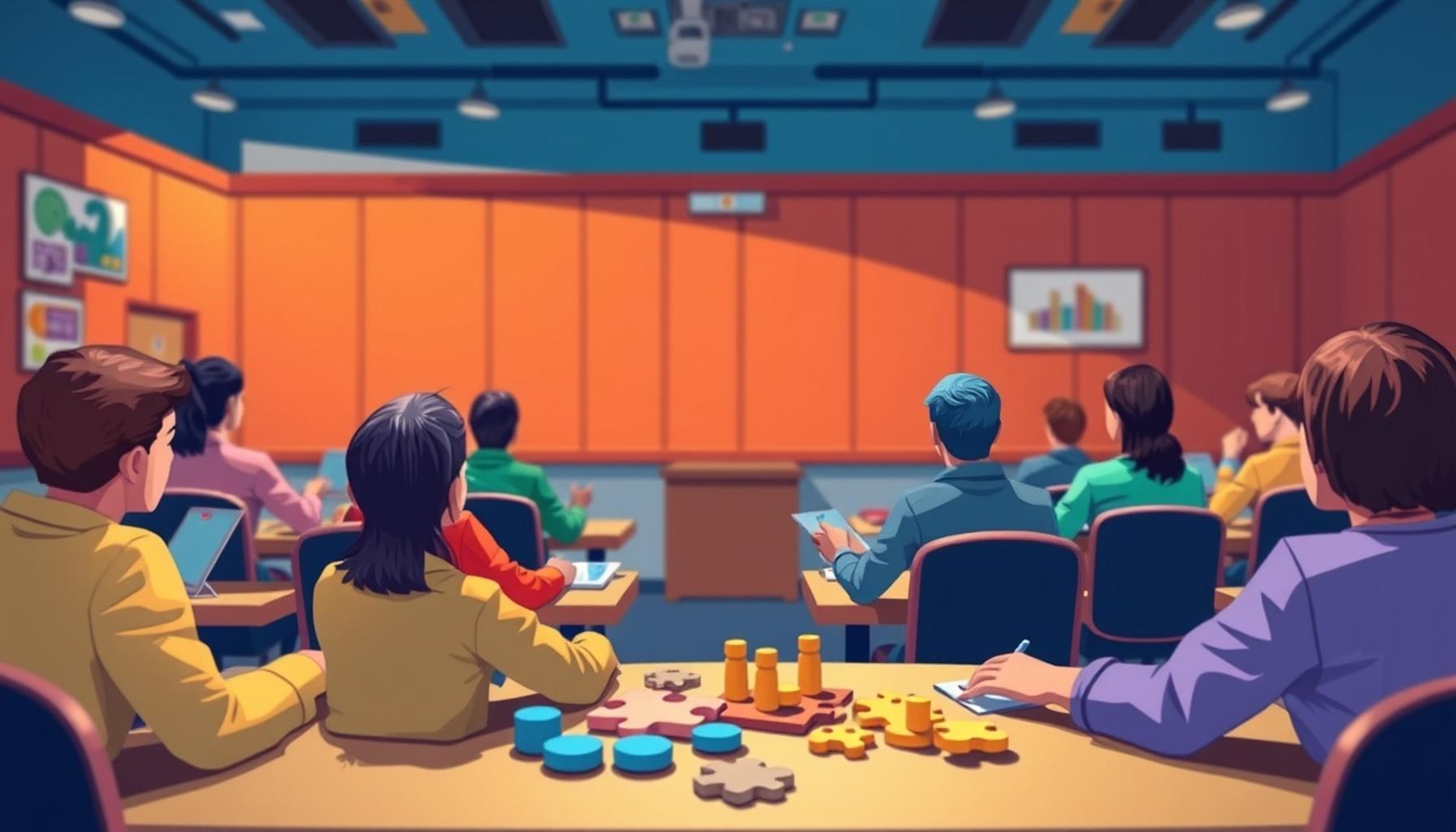
- Improved Collaboration: Multiplayer puzzles encourage teamwork and effective communication. Groups of students working together to solve a puzzle learn to share ideas, negotiate solutions, and build on each other’s strengths. This dynamic not only teaches them about collaboration but also reflects necessary social skills for future workplaces.
Research indicates that incorporating game-based learning can significantly impact student engagement. A study by the Education Development Center reveals that students who regularly participate in puzzle games demonstrate higher levels of motivation and achievement. For example, schools employing interactive puzzle games, like digital escape rooms, have reported a noticeable increase in students’ enthusiasm for learning and willingness to participate actively in classroom discussions.
From traditional jigsaw puzzles to modern digital challenges, the varieties are endless. Digital platforms such as “Kahoot!” and “Quizlet” offer educational games that challenge students on various subjects. Educators across the United States are recognizing the potential of these activities to transform the learning landscape, with many districts investing in resources to implement game-based learning in their curricula.
As we delve deeper into the role of puzzle games in education, we will explore how they can stimulate creativity and reshape the traditional classroom experience. The journey into this playful yet educational realm reveals exciting possibilities for both teachers and students alike. By leveraging puzzle games, educators can create a rich, engaging classroom atmosphere that not only supports academic success but also nurtures essential life skills.
Unlocking Creativity Through Puzzle Games
Puzzle games serve as effective conduits for enhancing creativity in educational settings. By immersing students in problem-solving scenarios that require thoughtful engagement, they stimulate imaginative processes that extend beyond the classroom walls. When students tackle a puzzle, they are not merely working towards a solution; they are exploring new perspectives and developing strategies that can apply to real-world challenges.
A notable aspect of puzzle games is their ability to bridge different subjects, thereby creating interdisciplinary links that promote a comprehensive learning experience. For instance, a puzzle that integrates historical facts requires students to engage not only with history but also with critical thinking, reading comprehension, and even teamwork. This multimodal engagement fosters an environment where students can express their creativity through collaboration and exploration, shaping their academic journey in meaningful ways.
The incorporation of puzzle games can also help disrupt the monotony often found in traditional teaching methods. Educators utilizing games such as Sudoku or digital applications like Prodigy Math find that students are more motivated to participate and tackle challenging concepts. Studies show that when students are enjoying their learning experience, they are more likely to take risks and think creatively, a valuable asset in today’s rapidly changing world.
Here are several key ways puzzle games contribute to stimulating creativity in the classroom:
- Encouraging Out-of-the-Box Thinking: Games that require unique solutions push students to step beyond conventional methods. This type of engagement fosters a culture of innovation where students feel confident to propose and explore novel ideas.
- Creating a Safe Environment for Failure: Puzzle games often involve trial and error, enabling students to learn that failure is a part of the creative process. This encourages resilience and a willingness to experiment without fear of negative consequences.
- Promoting Narrative Skills: Many puzzles incorporate storytelling elements, allowing students to create or follow a narrative. Engaging with plots or scenarios cultivates their imagination and enhances their ability to communicate and express ideas effectively.
In educational institutions across the United States, teachers are already witnessing these benefits firsthand. Schools implementing game-based learning strategies report not only improved academic performance but also enhanced interpersonal skills among students. Programs designed around puzzles often create more dynamic classrooms where passion for learning reigns supreme, leading to healthier emotional and social growth.
Ultimately, the use of puzzle games in education is more than just a trend; it is a transformative approach to fostering creativity. As educators recognize the potential of these games, the classroom environment becomes an open forum for exploration and imagination, ready to empower the next generation of thinkers and innovators.
Puzzle games have become increasingly recognized as powerful educational tools in fostering creativity among students. Through engaging and interactive gameplay, these games enhance problem-solving skills and critical thinking, essential traits in today’s learning environment. One significant advantage of incorporating puzzle games into the classroom is that they provide a platform for students to approach challenges from varying perspectives, encouraging innovative thinking. Rather than presenting a linear method to tackle problems, puzzle games invite learners to explore multiple solutions, further promoting artistic exploration and creative expression.Moreover, puzzle games often require collaboration and communication, essential skills in project-based learning settings. By working together to achieve a common goal, students learn to express their ideas clearly and listen to others’ viewpoints, enriching their educational experience. Additionally, the competitive element often included in these games fosters motivation amongst learners, encouraging them to engage more deeply with the material. This gamified approach not only makes learning enjoyable but also effectively stimulates creativity, as students feel empowered to take risks in their tasks and experiment with new ideas.Research supports the idea that puzzle games enhance cognitive functions such as memory, attention, and spatial reasoning. Studies have shown that students who regularly engage in puzzle-based activities tend to perform better in subjects that require logical reasoning and creativity, such as mathematics and arts. As educators look for innovative ways to enhance student engagement, puzzle games emerge as a valuable resource that combines fun and learning. Harnessing this potential can revolutionize classroom dynamics, turning traditional learning into an exciting journey of creativity and collaboration.
Puzzle Games as Learning Tools: Enhancing Critical Thinking and Collaboration
Puzzle games not only spark creativity but also play a vital role in enhancing critical thinking skills, an essential component of effective learning. By requiring students to analyze, synthesize, and evaluate information before arriving at a solution, these games cultivate higher-order thinking. For example, games like Escape Rooms have been adopted in various educational settings to challenge students to think on their feet and solve complex problems under time constraints. This immersive experience compels learners to approach challenges methodically, encouraging them to break down problems into manageable parts and consider multiple strategies—all while nurturing an engaging, stimulating atmosphere.
Moreover, the collaborative nature of many puzzle games is particularly advantageous in a classroom setting. In an era dominated by group projects and teamwork, games like Crossword Puzzles or digital platforms such as Quizlet provide opportunities for students to work together, leveraging each other’s strengths. As they share ideas and construct solutions collectively, students learn to communicate effectively, listen to differing viewpoints, and respect diverse thoughts. The interactive aspect often leads to deeper friendships and improved social dynamics, which are crucial for overall development.
In fact, a study conducted by the International Society for Technology in Education (ISTE) found that students engaged in collaborative puzzle-solving experiences demonstrated a 30% improvement in peer relations and classroom participation. This discovery emphasizes the importance of incorporating collaborative effort through puzzle games, serving as an impetus for educators to rethink their teaching strategies with a focus on community and teamwork.
Building Computational Thinking through Puzzles
Another significant advantage of puzzle games is their ability to nurture computational thinking. This skill is increasingly essential in our technology-driven society, as it encompasses the ability to logically break down tasks and formulate algorithms. Games that incorporate programming elements, such as LightBot or Cargo-Bot, allow students to visualize coding concepts in an interactive and enjoyable manner. As they navigate through levels of increasing difficulty, they begin to understand the fundamental principles of coding, all while solving engaging puzzles.
Educational experts are recognizing the value of integrating computational thinking into the curriculum as a means to prepare students for future careers in STEM (Science, Technology, Engineering, and Mathematics). A recent report by the U.S. Department of Education emphasized that integrating creative problem-solving activities, including puzzle games, can significantly bridge the gap between conventional education and essential 21st-century skills. This integration is particularly important as the nation faces a growing demand for skilled professionals in technology and engineering fields.
Innovation in Assessment: Puzzle Games as Tools for Evaluation
Surprisingly, puzzle games can also serve as innovative assessment tools. Instead of relying on traditional testing methods, which may create stress and anxiety among students, educators can leverage puzzles to evaluate understanding in a more dynamic and engaging way. For instance, using platforms like Kahoot! or interactive puzzles that require demonstrable problem-solving, teachers can assess knowledge retention while simultaneously fostering a fun environment. This not only provides instant feedback for both educators and students but also empowers learners to take ownership of their learning journey.
As educators increasingly implement innovative teaching techniques, the role of puzzle games in reducing test anxiety while enhancing creativity and critical thinking continues to grow. Teachers are discovering that when students are excited to solve a puzzle, they are also eager to learn, providing a refreshing alternative to conventional education practices.
Conclusion: The Transformative Impact of Puzzle Games in Education
As we navigate an increasingly complex educational landscape, the integration of puzzle games emerges as a powerful catalyst for fostering creativity, critical thinking, and collaboration among students. The evidence is compelling: by nurturing skills vital for academic and professional success, puzzle games not only engage students but also build foundational competencies necessary in today’s workforce. Through captivating experiences like Escape Rooms and collaborative platforms like Kahoot!, educators are redefining traditional assessment methods, transforming the classroom into a vibrant hub of dynamic learning.
Moreover, the infusion of computational thinking through engaging puzzles prepares students for future careers in the ever-expanding STEM fields. As our society increasingly depends on technology and innovation, fostering a strong understanding of these principles is crucial for equipping students to thrive. The statistics support this shift; research indicates that behaviors developed through puzzle-solving lead to improved social relations and teamwork, essential skills that extend beyond academia.
With the key findings showing a drastic improvement in student engagement and reduced test anxiety, the role of puzzle games in education is clear. They promote an interactive, enjoyable learning atmosphere that encourages curiosity and enthusiasm for problem-solving. As educators discover the potential of these games to not only enhance learning outcomes but also inspire a love for learning, the future of education may well depend on game-based learning methodologies that prioritize creativity and collaboration.
As we move forward, the challenge remains for educators and curriculum designers to continue exploring innovative ways to implement puzzle games into the classroom, ensuring that the next generation is not only knowledgeable but also adept at thinking critically and creatively. The puzzle pieces are falling into place—let’s embrace them for a brighter educational future.