The Future of Virtual Reality in Memory Tasks: Immersive Experiences for Cognitive Development
Transformative Potential of Virtual Reality in Memory Enhancement
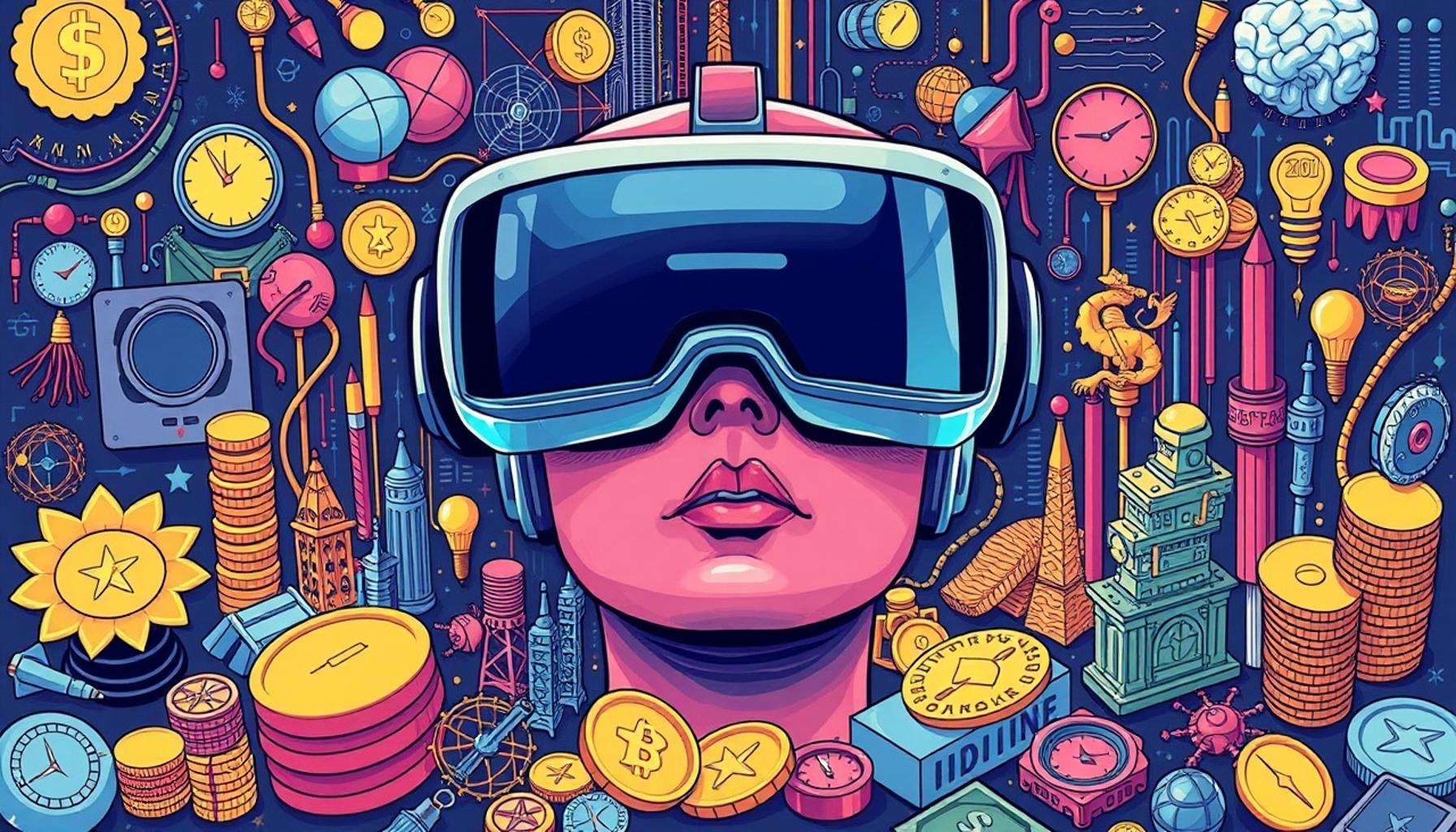
As technology evolves, virtual reality (VR) is stepping into the realm of cognitive development, promising transformations in how we approach memory tasks. By creating immersive experiences, VR has the potential to engage users like never before, offering unique advantages that textbooks and traditional learning methods cannot provide.
Consider the benefits VR brings to memory enhancement:
- Engagement: Users become active participants in their learning processes. Unlike passive reading, VR environments invite users to interact with the content, leading to heightened interest and better retention. For instance, a student exploring a virtual ancient Egyptian pyramid can visualize the structure and artifacts, making the learning experience memorable.
- Multi-Sensory Interaction: Visuals, sounds, and tactile elements work together for better retention. Immersive VR experiences engage several senses simultaneously, reinforcing memory pathways. Studies suggest that multisensory learning can boost information recall by as much as 50% compared to traditional methods.
- Real-Life Simulations: Practice tasks in environments that mirror real-world applicability. In a simulated medical scenario, medical students can practice surgical procedures without real-world consequences, enhancing their learning experience and memory of complex tasks. This practical application solidifies knowledge through experience.
Furthermore, recent studies underscore the impressive potential of VR technologies in reshaping educational strategies, particularly in settings like schools and training programs. For example, research conducted at universities has shown that young students trained in immersive environments demonstrate a marked improvement in recalling information compared to those engaged through traditional lectures. This is compelling evidence that highlights the transformative power of VR in educational contexts.
As researchers delve deeper into the functionalities of VR in cognitive development, the results could redefine our understanding of memory itself. By harnessing the power of immersive technology, we stand on the cusp of major breakthroughs in educational psychology and neurological studies. The question remains: how far can we push the boundaries of immersive technology to enhance our cognitive capacities? With advancements constantly being made, the future of learning and memory enhancement through VR is enticing and full of potential.
In conclusion, as virtual reality continues to evolve and integrate into educational systems across the United States, its role in memory enhancement could reshape learning paradigms. Enthusiasts, educators, and researchers alike are encouraged to explore this fascinating intersection of technology and cognitive science, potentially unlocking new methods for fostering improved memory at all ages.
Enhancing Memory through Virtual Learning Environments
The advent of virtual reality (VR) has unlocked unprecedented opportunities for enhancing memory, especially in educational environments. Consider how this technology allows learners to immerse themselves fully in subject matter, shifting from rote memorization to a more meaningful engagement with content. As we explore the future of VR in memory tasks, several key aspects stand out that highlight its transformative capabilities.
The Power of Contextual Learning
One of the most promising applications of VR in memory enhancement is its ability to create contextual learning experiences. When students immerse themselves in a virtual setting, they are not only consuming information—they are participating in a highly contextualized narrative that can significantly improve recall. For example, history classes can transport students to significant historical events, allowing them to ‘witness’ key moments that shaped our world. This contextual experience enhances not just their memory but also their understanding of the material.
Emotional Engagement and Memory Retention
Research has shown that emotional engagement can significantly influence memory retention. VR experiences often elicit stronger emotional responses compared to traditional educational methods. By incorporating scenarios that evoke emotions, students are more likely to remember information long after the session is over. For instance, a VR environment that simulates environmental changes can create a sense of urgency and connection to climate issues, enhancing the memory of that subject matter.
Accessible Learning for Diverse Needs
Virtual reality holds remarkable potential for accommodating diverse learning needs. With VR, educators can tailor experiences to suit various learning styles. For instance, visual learners might benefit from richly animated settings, while auditory learners can engage with interactive dialogue and explanations. Moreover, students with disabilities can navigate virtual spaces that allow them to learn in a way that may not be possible in a traditional classroom. This adaptability underscores not only the inclusivity of VR but also its ability to reach every learner effectively.
Future Trends in VR Technology for Cognitive Development
- Gamification: By integrating game elements into educational VR experiences, learners can simulate competitive environments that encourage memory challenges and cognitive growth.
- Data-Driven Insights: As VR technology advances, the ability to analyze user interactions will provide valuable data on learning progress, allowing educators to refine strategies for memory enhancement continually.
- Collaborative Learning Experiences: The potential for multi-user environments where learners can engage in team-based tasks creates a social aspect of learning that is often neglected in traditional settings.
As we navigate through the exciting terrain of VR in memory tasks, it is clear that immersive experiences stand poised to reshape cognitive development authentically. By creating rich, engaging environments that support diverse learning preferences and emotional connections, the future holds promise for deeper, more effective memory enhancement strategies. Educators and learners alike are encouraged to embrace these innovations, as the classrooms of tomorrow may very well be virtual laboratories of cognitive exploration.
| Advantages | Description |
|---|---|
| Immersive Learning Environment | Virtual Reality (VR) provides a simulated space where learners engage with content interactively, enhancing their ability to retain information and apply it in real-world scenarios. |
| Multisensory Engagement | By incorporating visual, auditory, and kinesthetic elements, VR strengthens cognitive connections, facilitating higher levels of memory retention and recall during memory tasks. |
| Customized Learning Experiences | VR can adapt to individual learning styles and memory capabilities, offering personalized challenges that cater to one’s pace, thereby promoting cognitive development. |
| Real-World Application | The immersive nature of VR makes it easier for users to visualize and practice memory tasks in scenarios that mimic their everyday life, enhancing practical cognitive skills. |
The integration of virtual reality within cognitive development frameworks is not merely about technology; it is a revolution in educational methods that harnesses the power of immersion to drive engagement and understanding. As studies continue to emerge, indicating the vast potential of VR in improving memory through tailored experiences, educators and psychologists are urged to explore these tools. The shift towards immersive experiences in learning presents opportunities for enhanced cognitive research and the development of effective strategies for memory training. By embracing these advancements, we can pave the way for innovative solutions that elevate human cognitive performance, bridging the gap between technology and education seamlessly.
Transformative Applications of VR in Memory Training
As the landscape of education evolves, virtual reality (VR) continues to emerge as a powerful tool for memory training, offering innovative applications that cater to various learning structures. By harnessing the immersive qualities of VR, educators and researchers are pioneering new pathways for cognitive development, enabling students to enhance their memory through engaging and experiential learning solutions.
Simulated Real-Life Scenarios
Virtual reality allows learners to engage in simulated real-life scenarios that require them to apply memory and problem-solving skills. For instance, medical students can practice complex surgical procedures in a risk-free VR environment, where they must remember a sequence of tasks. This practice not only reinforces memory but also builds critical thinking in high-pressure settings. Similar applications can be seen in fields such as law enforcement or emergency response training, where individuals must recall vast amounts of information while simulating realistic and stressful situations.
Neuroscientific Insights into Memory Formation
The convergence of VR and neuroscience presents exciting opportunities for understanding how memories are formed and retained. By utilizing VR environments, researchers can create controlled experimental settings to study memory processes. Early findings suggest that spatial memory—how we navigate and remember physical spaces—is enhanced through immersive VR experiences. For example, studies indicate that participants who engage in virtual exploration of a city exhibit improved recall of the city’s layout and landmarks compared to traditional methods. This insight is not only revolutionary for educational practices but also holds implications for therapeutic applications in memory-related conditions, such as Alzheimer’s disease.
Integration of Artificial Intelligence (AI)
The promising integration of artificial intelligence (AI) with VR technology is set to revolutionize memory training further. AI algorithms can analyze individual learning patterns and adapt immersive experiences accordingly. This dynamic personalization means that learners can receive tailored challenges that maximize their memory retention capabilities, responding in real-time to their performance. For instance, if a learner struggles with certain subjects, AI can adjust the difficulty level of the VR content or switch to related themes that facilitate better understanding and recall. This synergy not only enhances cognitive engagement but also redefines the learning landscape.
Social Impact and Collaborative Learning Dynamics
As virtual reality capabilities expand, there is a growing interest in its social implications, particularly concerning collaborative learning dynamics. Multi-user VR platforms foster environments where learners can interact, collaborate, and compete in memory tasks. The social aspect of learning is profoundly boosted as individuals share strategies, compete in memory challenges, and learn collaboratively, imitating real-world teamwork. This dynamic scaffolding proves beneficial, as learners can draw upon each other’s strengths and reinforce their memory through discussions and interaction.
Amidst this rapidly evolving landscape, the potential of VR in the realm of memory tasks underscores an exciting frontier for cognitive development. With ongoing research and technological advancements, the possibilities for enriching the learning experience continue to unfold, paving the way for a generation of learners equipped with innovative memory skills suited for future challenges.
Looking Ahead: The Future of VR in Memory Enhancement
As we delve into the future of virtual reality (VR) in memory tasks, it’s clear that we are standing on the precipice of an educational revolution. The integration of immersive experiences with cognitive development offers transformative potential that can redefine how we approach learning and memory retention. With VR’s unique ability to create engaging simulated environments, learners are set to experience enhanced retention and recall capabilities, paving the way for effective skill acquisition across diverse fields.
The insights gathered from neuroscience highlight the efficacy of VR in strengthening spatial memory, crucial in both academic and real-world applications. As ongoing research unveils the remarkable adaptability of human memory, VR stands as a promising ally in tailoring educational approaches to meet individual learning preferences. Furthermore, the incorporation of artificial intelligence (AI) serves to personalize learning experiences, presenting a tailored path towards cognitive mastery that was previously unimaginable.
As we look to the future, the potential for collaborative learning in VR environments hints at a significant shift in educational dynamics. By fostering teamwork and shared strategies, the social aspects of learning become an integral part of memory enhancement, creating a rich tapestry of shared knowledge and cognitive reinforcement. In a world that increasingly requires innovative problem-solving and adaptability, VR’s role in memory tasks not only signifies a technological advancement but heralds a new era in cognitive development.
In summary, with ongoing advancements and an increasing understanding of the brain’s complexities, VR holds the promise to reshape educational methodologies profoundly. As we continue to explore these immersive tools, the future looks bright for learners eager to unlock their memory potential and navigate the challenges of tomorrow.